


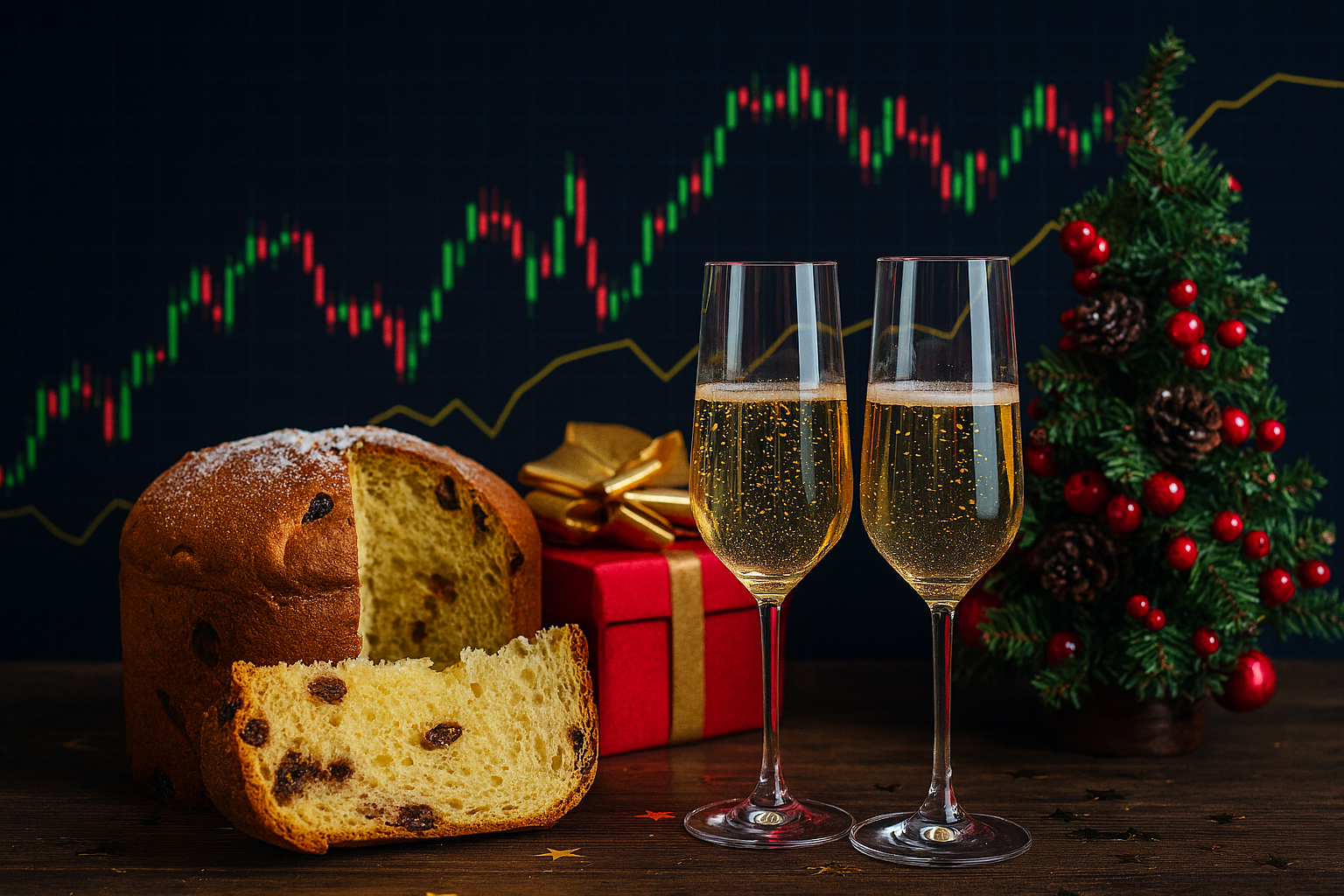
🇮🇹 Mercati e festività: meglio il panettone o il trading?
Sottotitolo: Dicembre porta con sé il mito del “Santa Claus Rally”, ma la realtà dei mercati è spesso fatta di scambi ridotti e volatilità minima. Forse è il momento giusto per staccare e godersi le feste.
Un mese di calma apparente
Dicembre è storicamente un periodo in cui i mercati rallentano. La riduzione dell’attività da parte degli operatori istituzionali comporta una contrazione della liquidità e una diminuzione della volatilità. Questo contesto può generare movimenti improvvisi, difficili da interpretare, ma raramente produce opportunità significative per strategie di breve termine.
Il mito del “Santa Claus Rally”
Gli ultimi giorni dell’anno e le prime sedute di gennaio sono spesso associati a un incremento dei mercati, noto come “Santa Claus Rally”. Le spiegazioni includono fattori psicologici, riallocazioni di portafoglio e dinamiche stagionali. Tuttavia, l’evidenza empirica mostra che non si tratta di un fenomeno garantito: in presenza di tensioni macroeconomiche o geopolitiche, il rally può risultare attenuato o assente.
Tempo di bilanci, non di operazioni marginali
Più che inseguire rendimenti limitati, dicembre rappresenta un’occasione per analizzare i risultati dell’anno, rivedere le strategie e pianificare con metodo il futuro. La pausa natalizia diventa così un momento utile per ricaricare energie e affrontare i mercati con maggiore lucidità a gennaio.
E poi in fondo dopo un anno di attività finanziaria godersi un po del calore natalizio che riavvicina alla famiglia è magnifico.
Perché a dicembre, più che inseguire grafici piatti, vale la pena brindare alla vita. Nota editoriale: con l’augurio di buone festività, Champagne e Panettone o Pandoro per l’occasione.
Mulino Francesco Maurizio – Direttore di “The Trading”, periodico scientifico finanziario
🇬🇧 Markets and Holidays: Panettone or Trading?
Subtitle: December brings with it the myth of the “Santa Claus Rally,” but the reality of the markets is often characterized by reduced trading volumes and minimal volatility. Perhaps it is the right time to pause and enjoy the holidays.
A Month of Apparent Calm
December is historically a period when markets slow down. Reduced institutional activity leads to lower liquidity and declining volatility. This environment can generate sudden moves, difficult to interpret, but rarely provides meaningful opportunities for short-term strategies.
The Myth of the “Santa Claus Rally”
The last days of the year and the first sessions of January are often associated with a market uptick, known as the “Santa Claus Rally.” Explanations include psychological factors, portfolio reallocations, and seasonal dynamics. However, empirical evidence shows that it is not a guaranteed phenomenon: in times of macroeconomic or geopolitical tension, the rally may be muted or absent.
Time for Reflection, Not Marginal Operations
Rather than chasing limited returns, December offers an opportunity to analyze yearly results, review strategies, and plan methodically for the future. The holiday break thus becomes a valuable moment to recharge and return to the markets with greater clarity in January.
And then, after a year of financial work, enjoying a bit of the Christmas warmth that brings you closer to your family is wonderful.
Because in December, more than chasing flat charts, it is worth raising a toast to life. Editorial note: with best wishes for the holidays, Champagne and Panettone—or Pandoro—for the occasion.
Mulino Francesco Maurizio – Director of “The Trading,” scientific periodical of financial